MMC10: Rashmi’s Journey From the Access Makeathon to a Career as a Professor, Entrepreneur, and Mentor
When Rashmi Prakash, then an undergraduate electrical engineering student at UBC, first signed up for the Access Makeathon in January 2017, she had no idea how it’d affect her life.
“I was getting into hackathons, and I discovered the Access Makeathon,” she shares. “I had come into it kind of knowing what was going to happen, but not really.”
The Access Makeathon was our first public event — Neil Squire’s Makers Making Change program had only been formally established a few months before. The event saw makers split into 10 teams, each captained by a person with a disability. Each team had 48 hours to design a working prototype to address a specific need of their team captain.
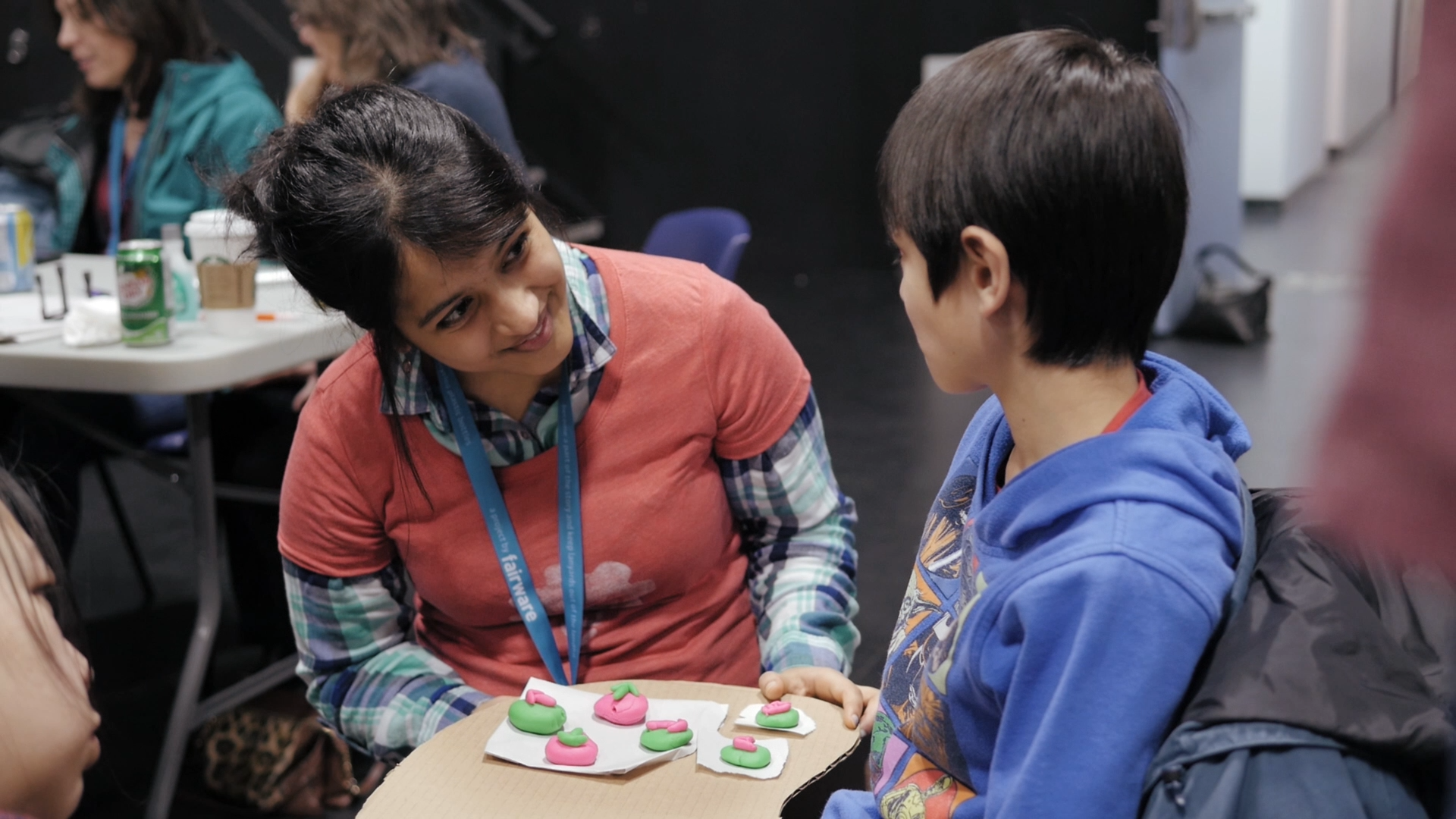
Rashmi had initially signed up intending to join her friends on a specific project. Instead, she was paired with a random team, who she quickly found she loved working with. They were working with Timothy, a 10-year-old boy who had had an anoxic brain injury when he was nearly two years old. Timothy wanted to play games on the Wii, but had difficulty pushing the buttons as well as using the analogue thumb joystick on the nunchuk.
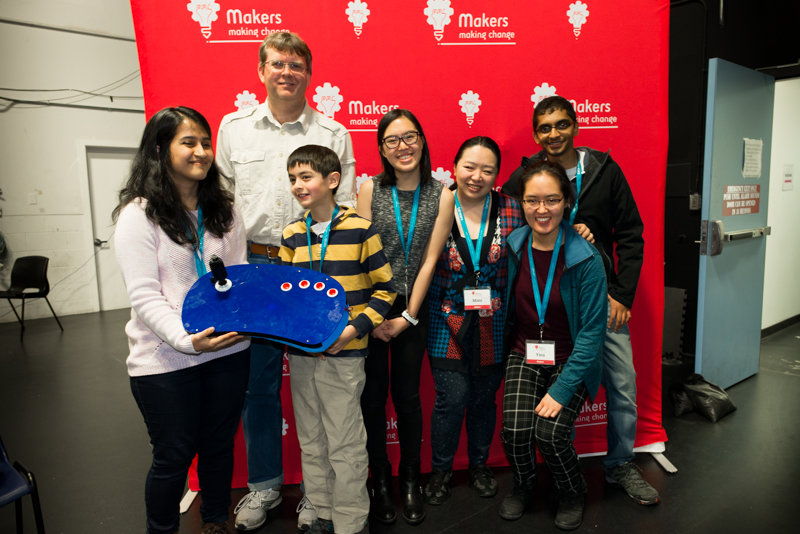
Over the 48-hour period, they worked on an accessible controller that allowed Timothy to play the games he loved like Lego Star Wars and Mario Kart.
“It was such a great experience,” Rashmi says. “I just remember how much support and collaboration there was.
“It was just so incredible to see Timothy's reaction to that controller we gave him. To be able to spend time with him, spend time with his dad to understand the problem is something that you don't really get in your education at all. And to be able to work with the people that you're helping, that was a really big game changer for me in terms of recognizing how important that was in my own personal journey in my career.”
Nearly ten years later, Rashmi, who is now a professor, a startup founder, and a respected mentor, she says the Access Makeathon was a defining moment for her.
“It was probably one of the core milestone moments of my life that I feel like definitely changed who I became as a person in my career,” she explains.
Joining the Team
Rashmi continued working with Timothy and his family on refining the adaptive controller after the Access Makeathon, and Neil Squire provided a workspace and tools to continue this work.
In May 2017, Rashmi became an early member of the Makers Making Change team, joining as an intern as she continued in her studies. For Rashmi, it was her first experience working in a field related to her studies.
“I feel like I learned so much from everyone,” she says of her experience working with the early Makers Making Change team. “I actually hadn't really done any internships before that, so Makers Make Change was my very first technical internship, I remember it very fondly as a result of that.”
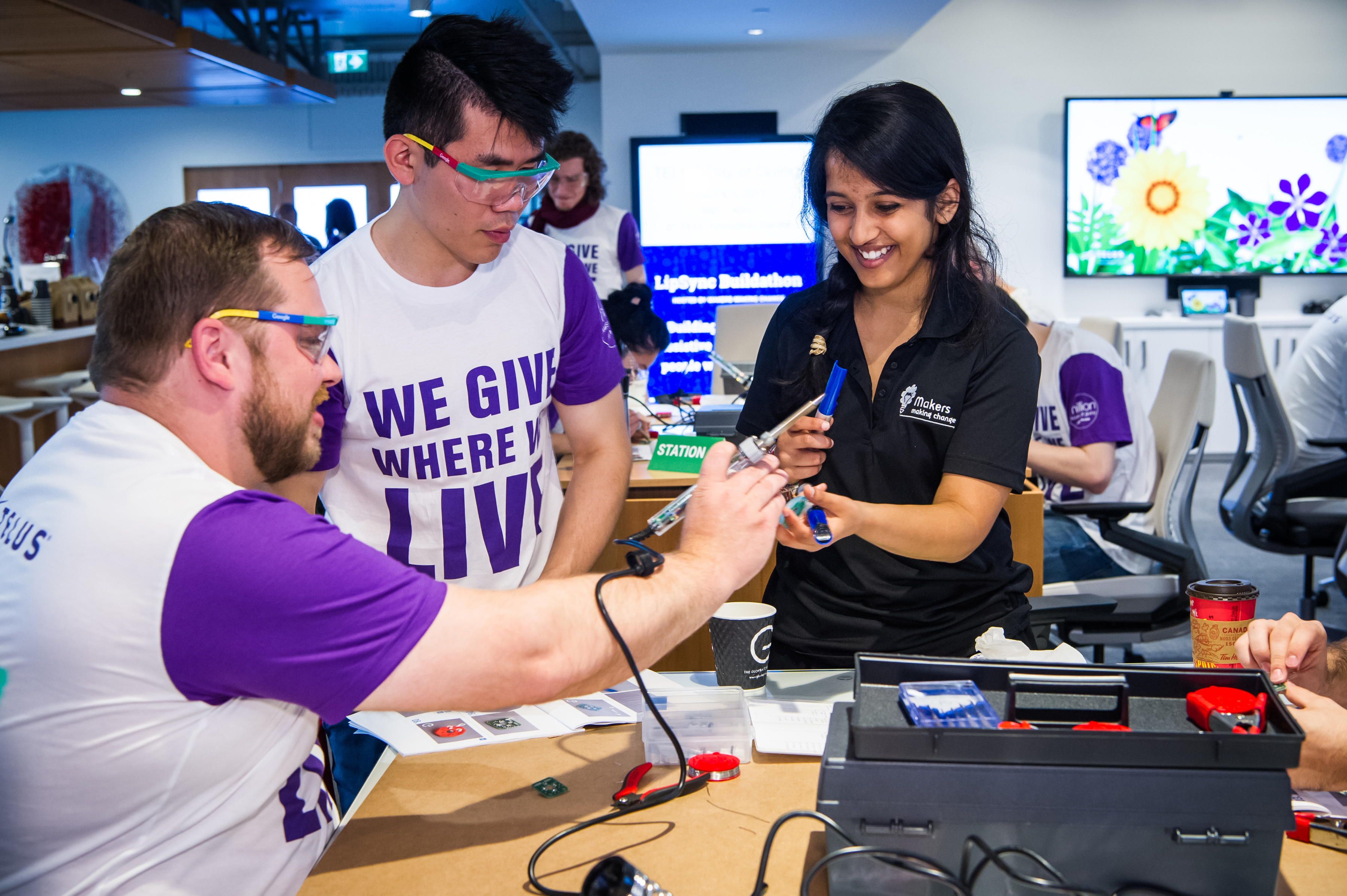
Rashmi played a big role in the initial rollout of the Assistive Device Library. By the time she joined the team, there was a working version of the LipSync that you could download the design files and build, but the goal was much bigger than just one device. Over the summer of 2017, Rashmi worked with the team on designing a number of assistive devices catering to a wide variety of needs.
In September 2017, we launched the first edition of the Assistive Device Library with 12 devices — many of the new devices like the Pen Ball and Key Turner were designed to be easily 3D-printed by makers of all skill levels. Throughout her tenure with the team, Rashmi would help continue to expand the device library and worked on an improved library where people with disabilities could request devices that launched in 2018.
Using her electrical engineering skills, she also helped work on the Bluetooth version of the LipSync.
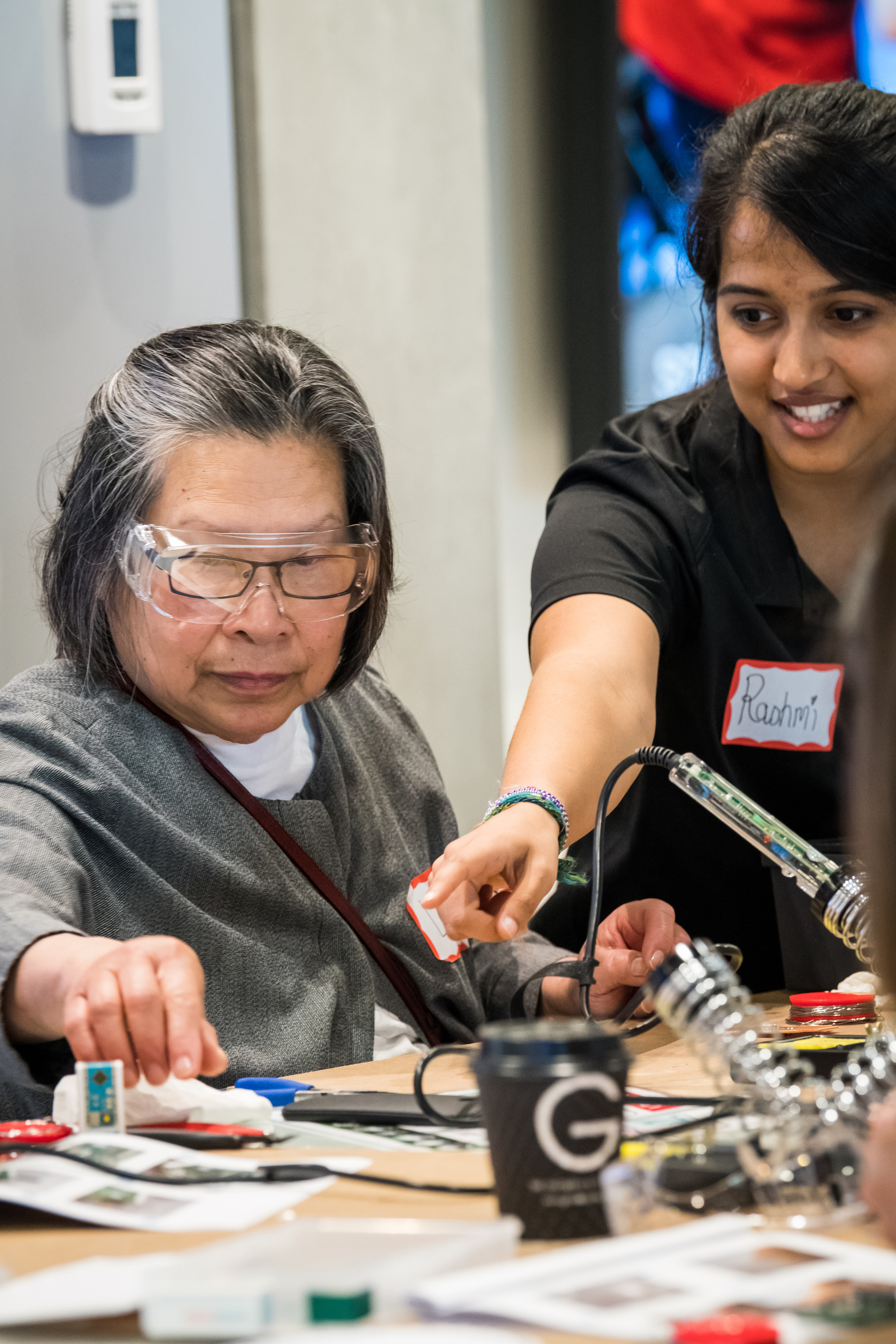
In addition to the engineering work she did, Rashmi also helped lead build events, engaging volunteers in building LipSyncs and other devices that would be donated to people who needed them. Rashmi really enjoyed working with the MMC team, particularly how passionate everyone was about their work.
“It was just such a great time,” she shares. “Spending time with the team and just growing as a professional because of the team was just so incredible.”
A Professor, Innovator, and a Mentor
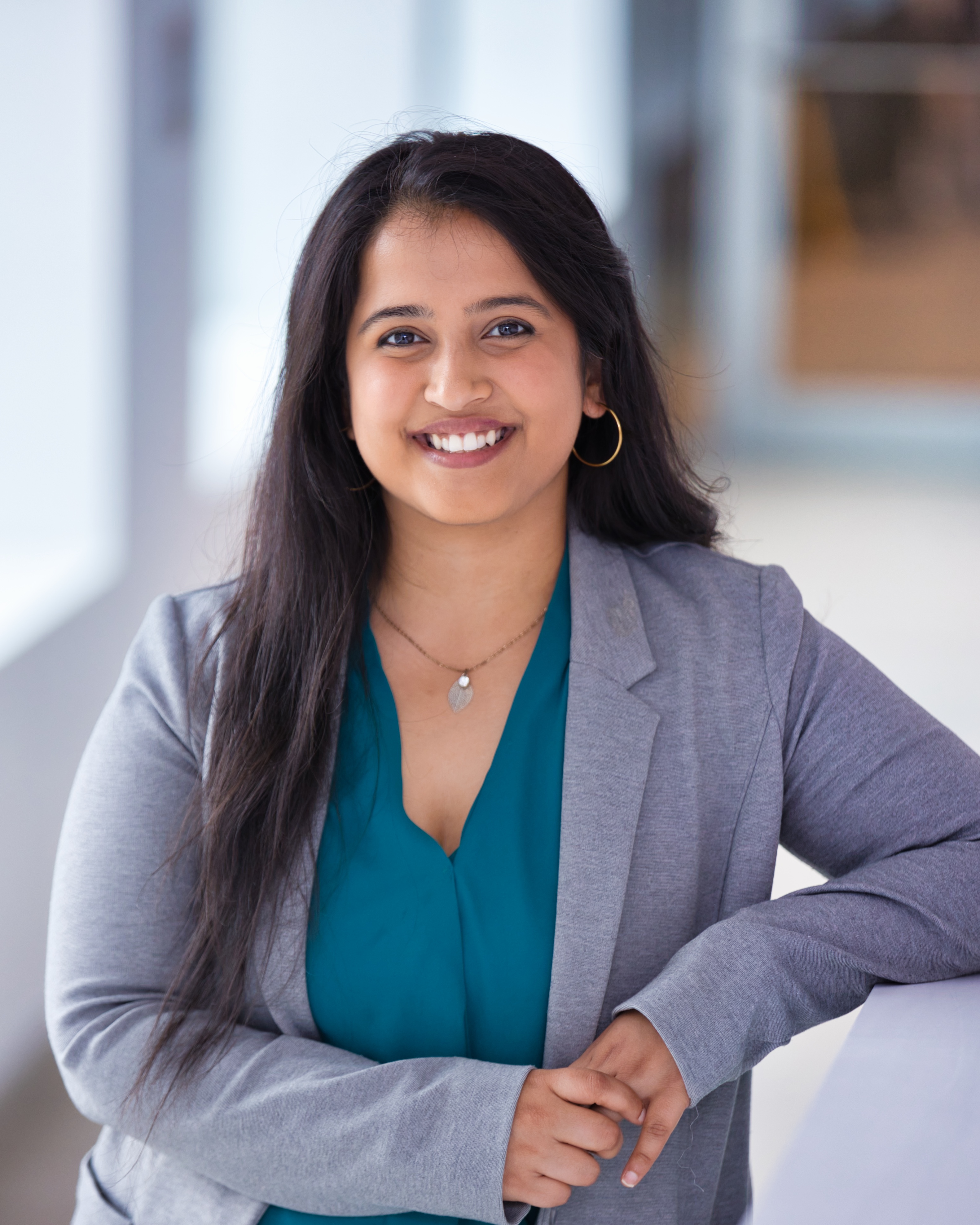
After her time with Makers Making Change wrapped up, Rashmi earned her bachelor’s degree in electrical engineering. She worked for a company developing medical devices including tourniquet systems and sensors, before returning to UBC for her master’s degree in biomedical engineering.
While studying for her master’s, she worked as a clinical engineer at a hospital in Vancouver and as a TA at UBC. During this time, she also worked with the university to get the biomedical engineering program accredited — established in 2017, it was a new program at the time — and developed some of the courses for the program.
This led to an offer to become an adjunct professor at UBC in biomedical engineering in 2021, a role Rashmi holds to this day.
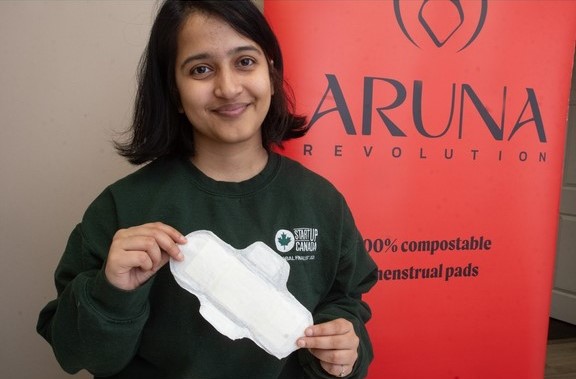
Around this time, Rashmi launched a startup, Aruna Revolution, which focused on developing compostable menstrual products, which are both safer to use than many mainstream products which often have plastics, and better for the environment.
“The reason that I created it was because there's a pretty big problem in the world of menstrual products and healthcare products in that they cause a lot of waste and the materials that are being used for them aren't really optimized for safety or functionality. I wanted to improve that,” she says.
“I started working on that, and then I developed a process to be able to extract fibers from virtually any kind of material as a result of that. And then I learned how to take those fibers, manufacture them into not only menstrual products, but a whole assortment of healthcare products. And we started selling them to the market.”
Having re-located to Halifax in 2022 to launch her startup, Rashmi and her co-founder successfully pitched the start-up on Dragons’ Den in 2025, and Aruna Revolution has received recognition through awards like James Dyson Award’s Canadian prize. Rashmi's work gained international recognition, leading to speaking invitations in places like Dubai and Singapore.
When Rashmi started Aruna Revolution, she didn’t know much about running a business — she had to learn.
“I had only ever really learned the engineering process. I knew nothing about business. I knew nothing about HR, and we had a team of 10 people at one point. So, I needed to learn how to do payroll, tax remittance, all of that,” she shares. “It was a completely new ballgame for me in the sense of learning how to do projections, learning how to do market analyses and things like that. It was a lot, but it was great. I really enjoyed it.”
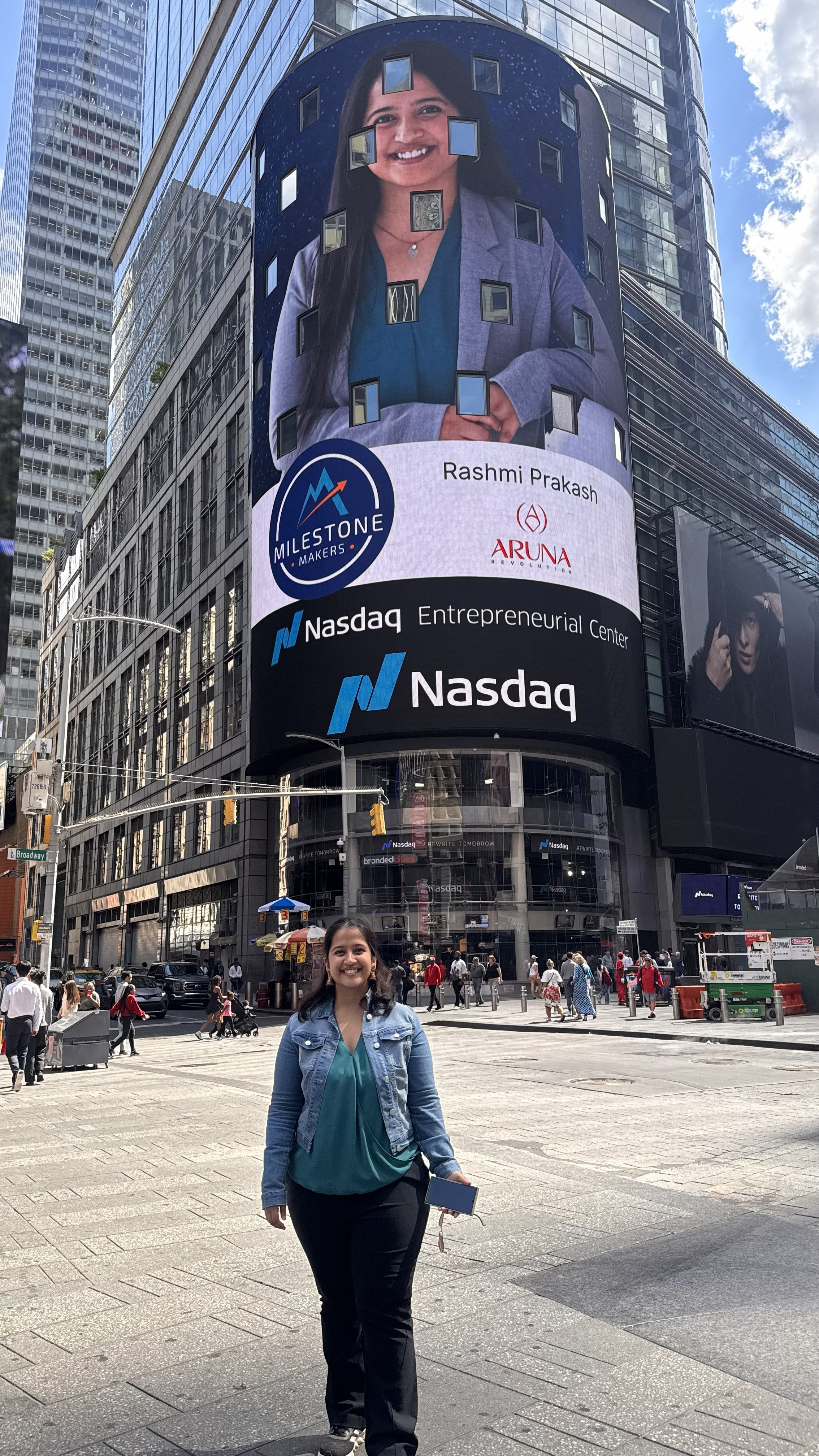
Today, she passes on the lessons she has learned. In addition to role as an adjunct professor at UBC, which she continues to do remotely from Halifax, she is also mentoring start-ups both local and international, and working with the Nova Scotia Health Innovation Hub on matters related to commercialization and intellectual property, and leading a small team at re.generation Media to use story telling for culture change.
Looking back, Rashmi credits her time with Neil Squire for influencing her career.
“Makers Making Change and the Access Makeathon was kind of like the spark that has essentially set off the trajectory of my career,” she says. “And a big portion of that comes from this experience of learning how to solve a real problem. [. . .] Because it's so easy to get lost in this idea of creating cool technology, but if you're not resolving the problem at the core of it, if you're not thinking about who you're helping, then it just won't ever be anything truly impactful.
“I'm just massively grateful for everything that I was able to do during my time at Neil Squire.”