Device Selection Guide: Writing Aids
In our Assistive Device Library, we have a number of writing aids available to help users with a variety of disabilities use pens, pencils, and other writing utensils — some make it easier to grip a writing utensil, some don't require the use of your hands to write. We also have devices that work as a hand guide, making it easier to print in small areas on paper.
Use this device selection guide to find the right writing aid for your needs.
Access Devices
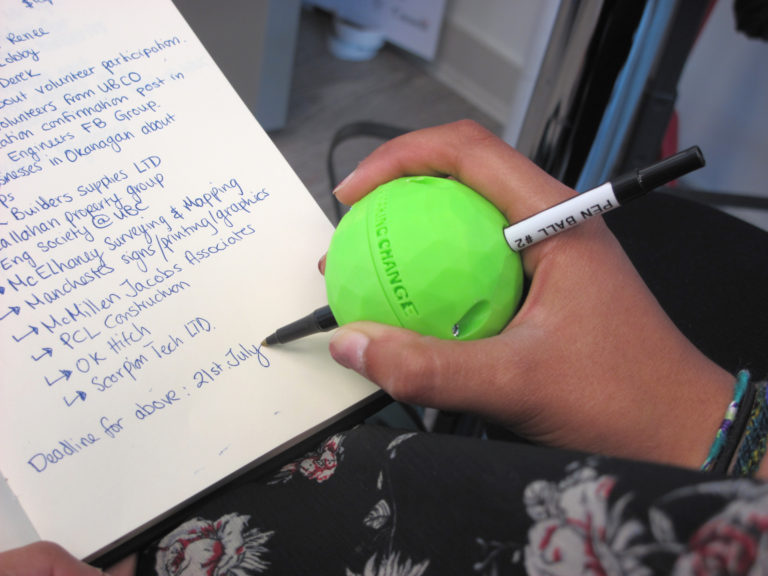
A customizable writing aid, the pen ball allows you to put your pen, pencil, or other writing utensil into a 3D printed ball, making it easier to grip. Based on an occupational therapy technique of putting a pen or a pencil into a tennis ball, the pen ball may be useful for someone who has difficulty holding a pen or pencil directly, such as a person with arthritis. The diameter of the ball and the writing utensil diameter can be customized to fit your needs.
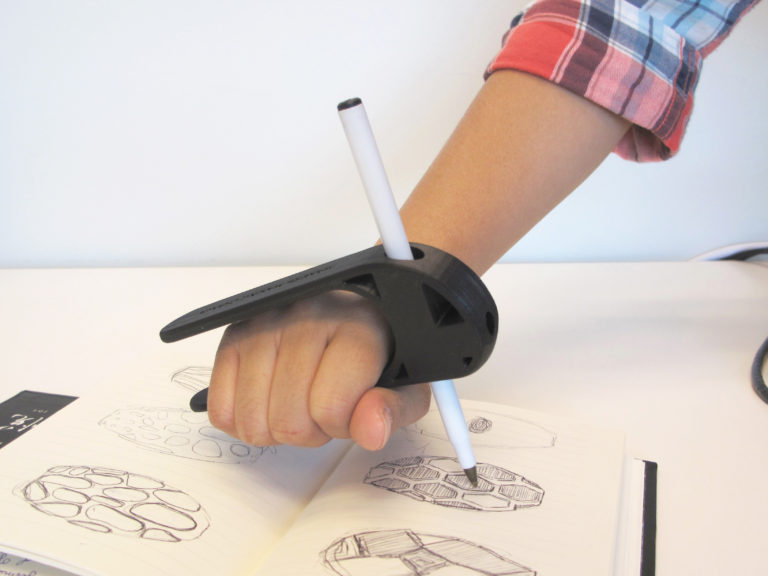
The palm pen holder is a low-cost, 3D printed writing splint that slips onto the palm. Users can gently curl their fingers around a handle to hold it securely or hook their thumb around the writing utensil. This 3D-printed assistive device has a large hole that can accommodate the width of various writing tools. This device may be useful for those who have limited grip strength or finger dexterity.
Finger Pencil Holders
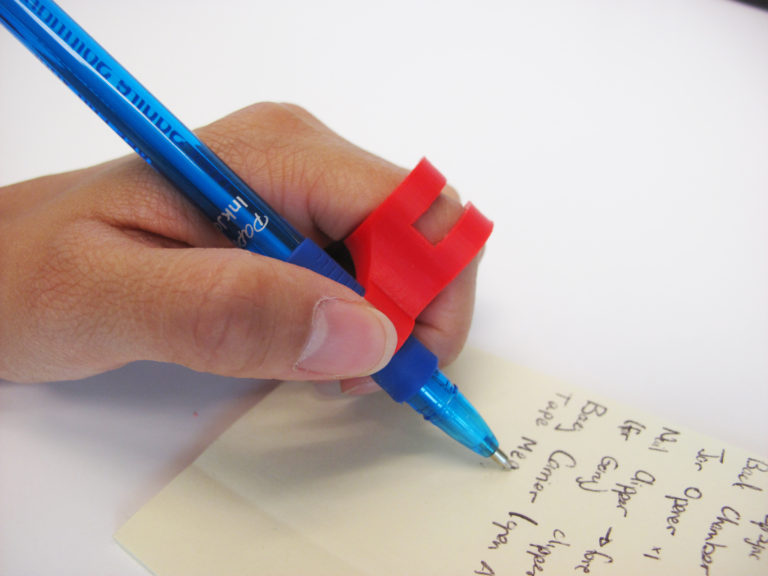
The finger pencil holder is a low-cost, 3D printed aid that holds a writing utensil and fits onto a finger. This 3D printed assistive device is useful for those with difficulty gripping and still have some movement in their wrist or hand. We have three versions in our library: a horizontal finger pencil holder that can be worn on the thumb or index finger, a vertical finger pencil holder that can be worn on the index, middle, ring, and pinky fingers.
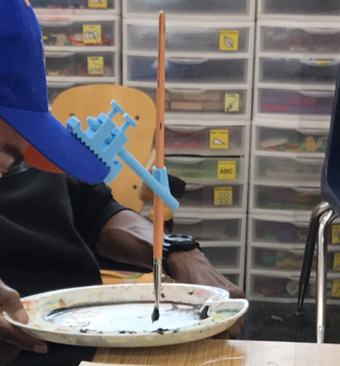
The Adapted Head Pointer allows people with limited use of their hands or arms the ability to write, paint, or even use a computer. The head pointer can be worn on a baseball cap or visor, and can hold a writing utensil, paintbrush, dowel, or similar device, so that a user can control it with head movement.
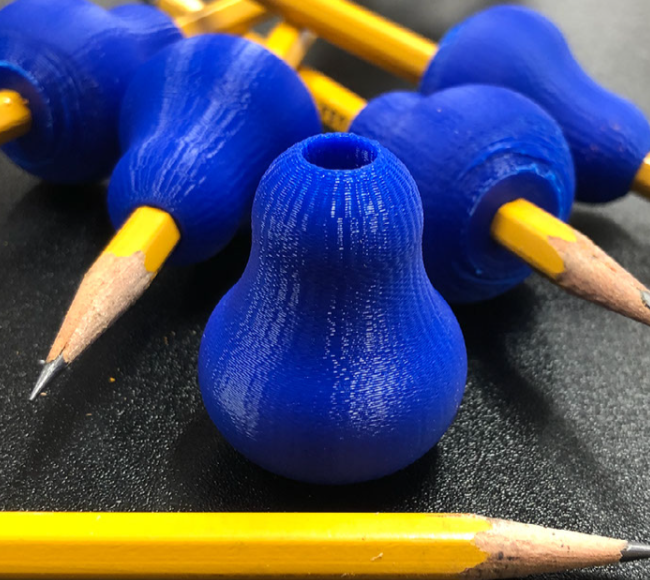
The assistive pencil grip is an adaptive aid designed to be used by persons that have low grip strength or mobility in their hands. You can choose between two sizes — 7.8 mm and 9.8 mm — to best accommodate your choice of pencil. This design was created as part of the Make:able Challenge.
Hand Guides
Signature Guides
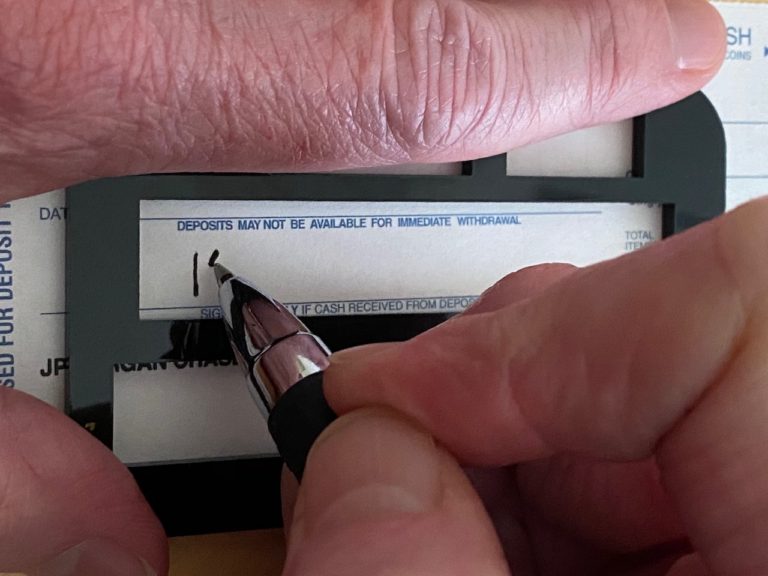
A Signature Guide is a low cost, 3D Printed Assistive Writing Aid that helps people with dyslexia or other disabilities to write on a specific spot for purposes such as writing a name, signature, or initials. This design is the size of a standard ID card so it will fit in a wallet and has five different boxes for different sizes. In our library, we have a 3D printed version and a laser cut version.
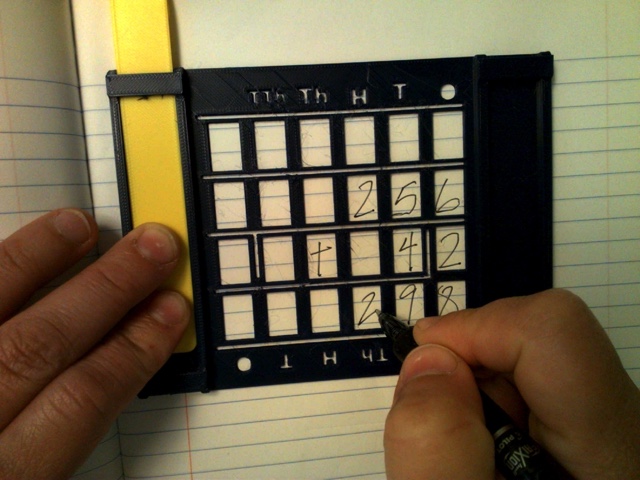
The number aligner is a low-tech support for students with dysgraphia or fine motor issues that struggle with writing numbers in a small area and following along put numbers in alignment for basic math — addition, subtraction, long division, and multiplication. The aligner has a guide ruler that fits into the slot on the side and hooks onto the top of the notebook or workbook to ensure correct tracking of place values for multistep computations. A horizontal guideline is provided between each row for the “equal to” line, as well as a shorter vertical line on the second to generate long division problems.